




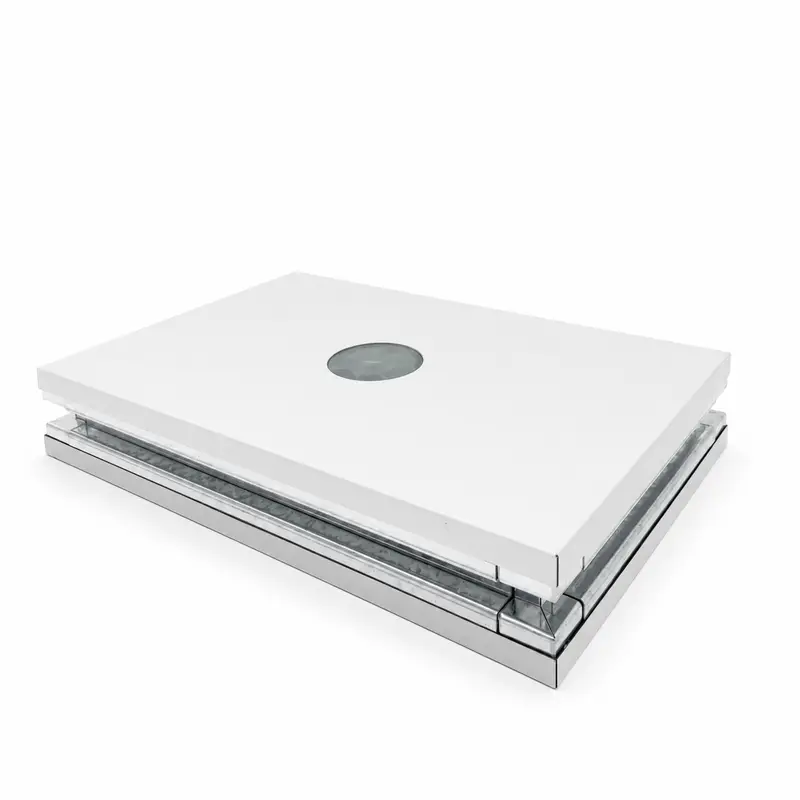
Aluminum Honeycomb cleanroom panel is an advanced composite panel system specifically engineered for high-performance controlled environments.
Aluminum Honeycomb cleanroom panel,cleanroom wall panels
For engineering teams across semiconductor & electronics manufacturing, biopharma R&D, aerospace assembly, precision optics labs, food-grade production lines, EV battery plants, and next-gen data centers — consistency, particle control, and structural integrity aren’t optional. They’re non-negotiable. The Aluminum Honeycomb Clean Room Panel delivers exactly that: a rigorously engineered clean room panel built for Class 1–ISO 5 (Class 100) environments and beyond.
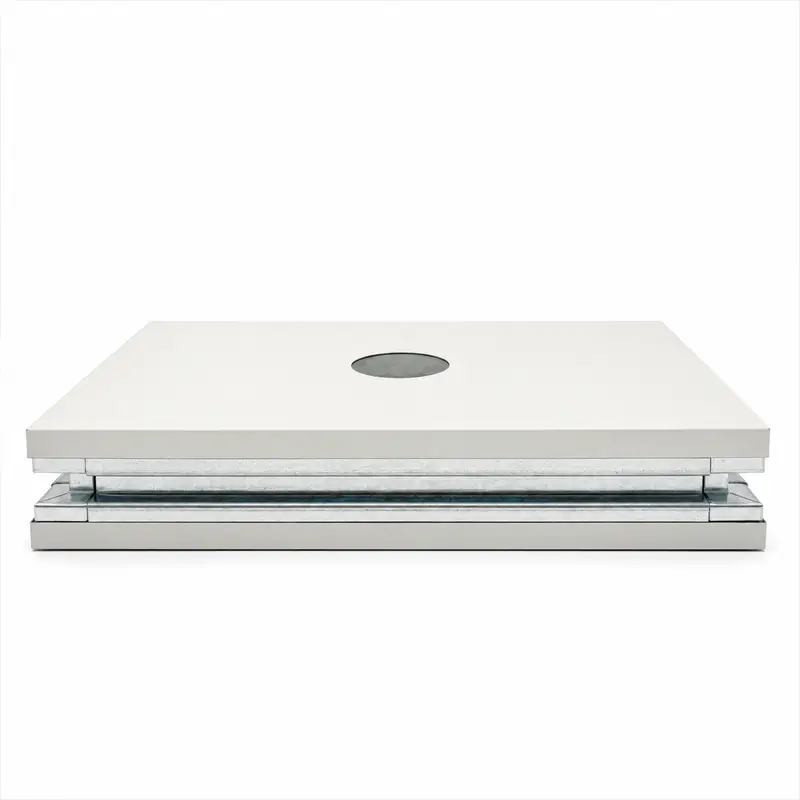
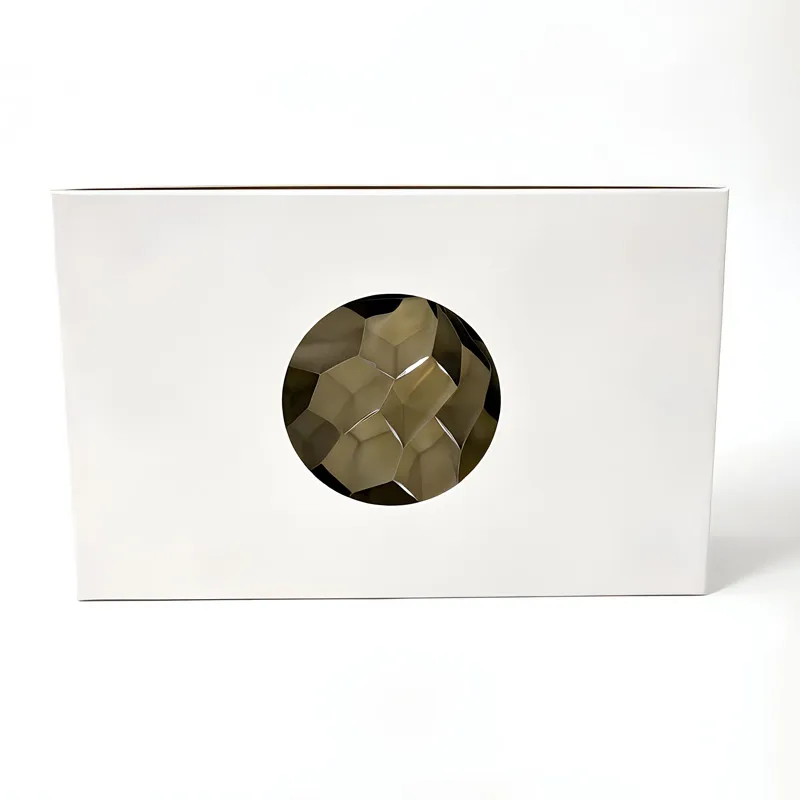
Unlike standard sandwich panels or gypsum-based systems, this panel uses aerospace-grade aluminum honeycomb core — lightweight yet exceptionally stiff, with near-zero thermal expansion and no outgassing. Its non-porous, anodized aluminum skin resists corrosion, withstands repeated chemical wiping (IPA, hydrogen peroxide, VHP), and meets ISO 14644-1 particulate limits without shedding fibers or micro-debris. Whether you’re specifying a clean room partition system, upgrading a clean room wall system, or building a modular clean room partition for isolator integration, this panel offers unmatched dimensional stability and long-term performance.
As one of Asia’s most trusted clean room panel manufacturers, Motovena designs each panel to industry-specific validation requirements — from FDA-compliant surface smoothness (Ra ≤ 0.4 µm) for biologics fill-finish suites, to ESD-safe grounding options (10⁴–10⁶ Ω) for wafer probe stations. And because real-world deployment demands flexibility, our panels integrate seamlessly with standard T-bar ceiling grids, structural steel frames, and existing HVAC interfaces — eliminating costly field modifications.
Whether you’re a Tier-1 automotive supplier building EV battery cleanrooms, a solar film manufacturer requiring humidity-stable walls for thin-film deposition, or a green energy manufacturer scaling hydrogen electrolyzer assembly lines, this isn’t just another clean room panel material. It’s a foundational component engineered for reliability — day after day, year after year.
Every clean room panel is manufactured to exacting clean room panel specifications, verified per ASTM E2810 (airborne particle generation), ISO 14644-3 (sealing integrity), and UL 723 (flame spread ≤25). Below are standard configurations — all customizable for project-specific needs:
Our clean room partition panels support both dry-joint (gasketed tongue-and-groove) and wet-seal (silicone-injected) installation — ideal for sterile barrier applications. All panels ship pre-drilled and labeled for rapid alignment, reducing labor time by up to 35% versus traditional stick-built clean room partitions. As a certified clean room panel supplier, we provide full traceability: batch-certified material test reports (MTRs), surface particle counts (per ISO 14644-1), and third-party cleanability validation (ASTM D4285).
Regarding clean room panel price: While initial investment sits 12–18% above standard steel-clad panels, lifecycle cost analysis shows 40%+ savings over 10 years — thanks to zero replacement due to warping, zero resealing cycles, and no degradation under UV or ozone exposure. For budget-sensitive projects, we offer phased delivery and OEM co-engineering to optimize panel count and minimize waste.
This isn’t theoretical performance — it’s proven in over 217 validated installations across six high-stakes sectors. Here’s how engineering teams apply it:
Semiconductor & Electronics: Used as clean room partition walls inside EUV lithography tool bays and wafer sort areas — where sub-1nm vibration control and electrostatic dissipation are mandatory. Panels anchor directly to seismic-rated floor slabs, eliminating resonance during stepper operation.
Biopharma & Life Sciences: Integrated into Grade A isolators and aseptic filling lines as clean room partition panels. Surface smoothness prevents biofilm adhesion; non-shedding behavior passed USP <797> environmental monitoring protocols.
Aerospace & Precision Optics: Installed in satellite payload assembly cleanrooms (Class 10) where outgassing could contaminate optical coatings. Meets ECSS-Q-ST-70-02C total mass loss (TML) <1.0% and collected volatile condensable materials (CVCM) <0.10%.
Food & Beverage & Automotive: Deployed in EV battery dry rooms (dew point –40°C) and ready-to-eat packaging zones. Resists condensation-induced delamination — unlike wood-core or MDF-based clean room panels.
Green Energy & Solar Film Manufacturing: Selected by Tier-1 solar equipment makers for thin-film CIGS and perovskite coating chambers. Thermal stability ensures zero dimensional drift during 200°C process cycles — critical for clean room panels for green energy manufacturers and clean room panels for solar film manufacturers.
And for hyperscale data centers adopting immersion cooling or hydrogen backup systems? These panels form the structural backbone of server containment pods — rated for continuous operation at 95% RH and certified for low VOC emission (CA 01350 compliant).
Whether you need a complete Clean Room Partition System, retrofit clean room partiotion walls, or require turnkey validation support, Motovena serves as your strategic clean room panel supplier — not just a vendor. We collaborate early in design phase, provide BIM-ready Revit families, and support IQ/OQ documentation for FDA, ISO 13485, and IATF 16949 audits.
Explore our full range of clean room panels, including HPL-faced, fiberglass-reinforced, and acoustic-rated variants — all engineered for performance, compliance, and longevity. Because in mission-critical environments, there’s no substitute for certainty.
Contact us today for a free quote.