




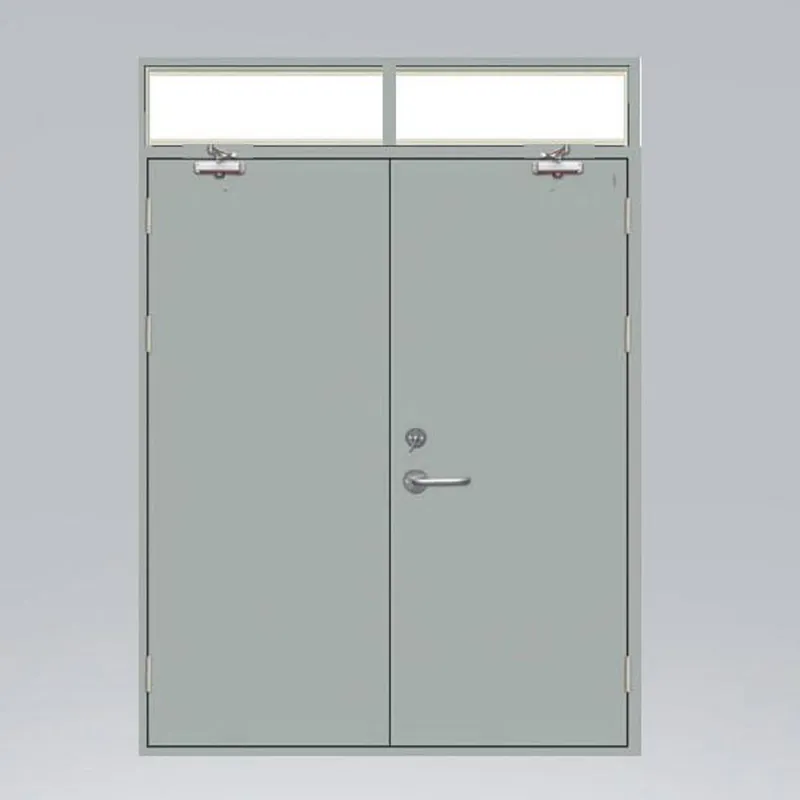
Fireproof door refers to a door that can meet the requirements of fire stability, integrity and heat insulation in a certain period of time.It is located in the fire partition room, evacuation stairwell, vertical shaft and other fire retardant divider with certain fire resistance...
fiberglass wall panels, fire escape door, fire rated clean room pass through box, fire rated cleanroom doors, fireproof door, fireproof doors, fire-rated cleanroom entry door, flexible cleanroom, flexible cleanrooms
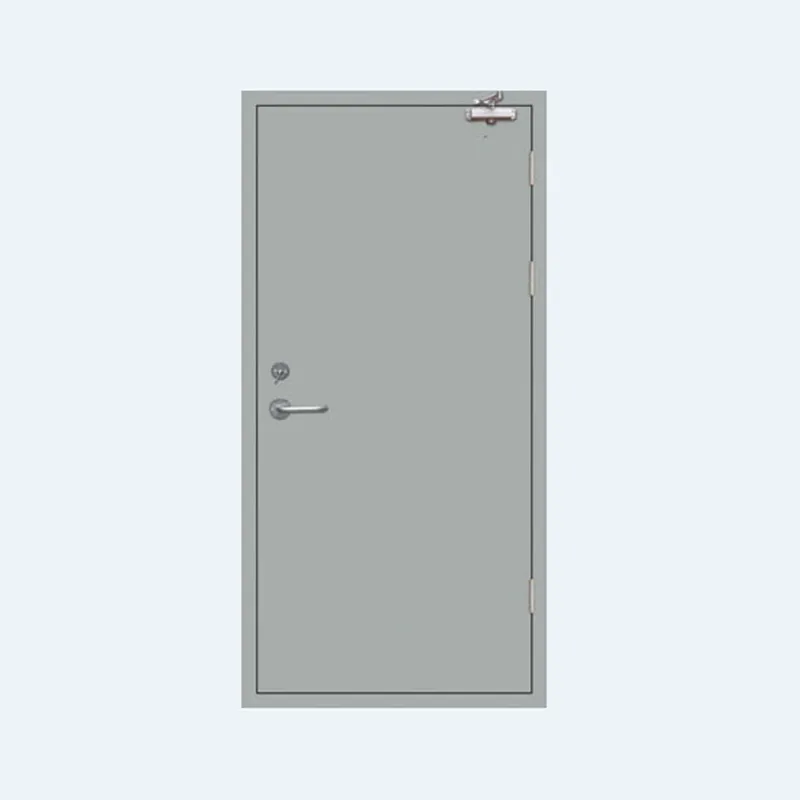
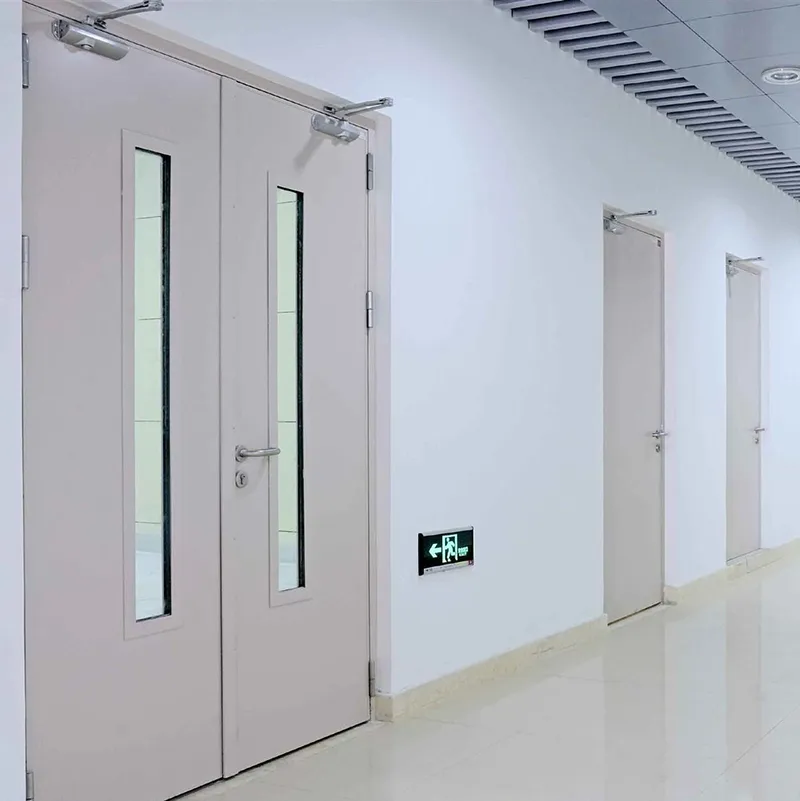
With over two decades of hands-on experience designing, specifying, and commissioning cleanroom infrastructure across semiconductor fabs, biopharma facilities, aerospace test labs, and precision manufacturing plants — I’ve seen how a single component can define system resilience. The Spain prefabricated cleanrooms and Spain modular cleanroom systems we support are built to exacting international standards — but their integrity hinges on critical interfaces. Among them, the Fireproof door is not just a safety requirement; it’s a calibrated convergence of fire containment, particulate control, pressure stability, and operational continuity.
This Fireproof door is purpose-built for environments where fire-rated separation must coexist with ISO Class 5–8 cleanliness, laminar airflow integrity, and frequent human or material throughput. Unlike standard fire doors, it integrates seamlessly into flexible cleanroom architectures — supporting rapid reconfiguration without compromising fire compartmentation. Its frame-to-panel thermal expansion matching prevents gasket distortion during fire exposure, while its dual-seal design maintains ≤0.05 Pa differential stability under dynamic pressure cycling. For pharmaceutical plant fireproof glass door applications, it meets both EN 1634-1 (fire resistance) and ISO 14644-1 (airborne particle control), verified via third-party smoke leakage testing at 25 Pa.
The door’s glass door Design uses laminated, low-iron, tempered borosilicate glass — offering >92% visible light transmission and zero outgassing. It’s manufactured at our dedicated glass door Factory, where each unit undergoes full-cycle UV-cured edge sealing and helium leak validation (<1×10⁻⁶ mbar·L/s). This ensures compatibility with glass panel clean room, glass partition wall clean room, and glass wall clean room assemblies — whether deployed as standalone entries or integrated into full-height glass partition wall cleanroom façades. Structural backing uses non-corrosive stainless steel and fiberglass wall panels rated to ASTM E84 Class A, eliminating delamination risk in high-humidity bioprocessing zones.
Critical ancillary components are engineered in parallel: the fire rated clean room pass through box shares identical fire rating and surface finish; the fire escape door variant includes panic hardware certified to EN 1125 and integrated with cleanroom-compatible electromagnetic locks; and the fire-rated cleanroom entry door offers optional automatic closing with pneumatic dampers that engage silently — no air turbulence, no particle resuspension. All variants support integration with BMS protocols (Modbus TCP, BACnet MS/TP) for real-time status logging and audit-ready event tracing.
| Parameter | Specification |
|---|---|
| Fire Rating | UL 10C / EN 1634-1: 60/90/120 min (tested as part of full flexible cleanrooms assembly) |
| Materials | Frame: 316L stainless steel (electropolished); Core: intumescent mineral wool + ceramic fiber composite; Glazing: 19 mm laminated borosilicate (EN 1279-2 compliant) |
| Surface Finish | Electropolished SS frame (Ra ≤ 0.4 µm); Glass edges UV-sealed; No silicone, PVC, or organic adhesives |
| Air Leakage (at 25 Pa) | ≤0.03 m³/m²·h (per ISO 14644-3 Annex B) |
| Particulate Shedding | Verified per ISO 14644-1 Class 5 (0.5 µm) during 100+ open/close cycles |
| Operating Temperature Range | −10°C to +65°C (suitable for cold-chain pharma, battery dry rooms, and clean data halls) |
| Compliance | EN 1634-1, UL 10C, ISO 14644-1, ISO 14644-3, FDA 21 CFR Part 11 (BMS interface), GMP Annex 1 (2023) |
In a Penang-based semiconductor backend facility, this Fireproof door serves as the primary access between EUV litho tool bays and chemical delivery corridors — rated EI120, with integrated HEPA-filtered purge airflow to prevent cross-contamination during emergency egress. In a Johor biologics manufacturing plant, the pharmaceutical plant fireproof glass door separates Grade C fill-finish suites from Grade D support areas, meeting MHRA and PIC/S expectations for visual monitoring *and* fire barrier integrity. Its clarity supports operator supervision without compromising separation — a key advantage over opaque alternatives.
For aerospace MRO hangars in Subang, the fire escape door variant enables rapid personnel exit while maintaining ISO Class 7 airborne cleanliness in adjacent calibration labs. Its pneumatic closer eliminates slamming — critical near vibration-sensitive optical benches. In Spainn EV battery module assembly lines, where electrolyte handling demands strict Class 6 environments, the fire-rated cleanroom doors integrate with nitrogen-purged pass-throughs (fire rated clean room pass through box) to isolate flammable storage zones without interrupting workflow.
Data centers deploying flexible cleanroom server rack enclosures use the same door platform — scaled for 800 mm clear opening — to contain thermal runaway events in lithium-ion battery backup rooms, while preserving acoustic isolation and RF shielding continuity. And in food-grade packaging cleanrooms in Perak, the Fireproof door’s non-porous, cleanable surface and absence of crevices meet SQF Edition 9 microbiological control requirements — proving that fire safety and hygienic design are not trade-offs, but synergies.
Whether you’re specifying for a new glass panel clean room build-out, retrofitting an aging glass partition wall clean room, or upgrading legacy entries in an existing Spain modular cleanroom systems installation — this Fireproof door delivers verified performance, not theoretical compliance. No factory location is stated because what matters is traceability, test evidence, and field-proven behavior — all documented, auditable, and aligned with your process-critical thresholds. Because in clean environments, fire protection isn’t about surviving the event — it’s about ensuring continuity *after* it.
Contact us today for a free quote.